
Finding Waukesha County Property Records
Start from the address when you have one. The Waukesha County Parcel Inquiry and Tax Listing tools accept a street address. They also accept a tax key. Either path leads to a tax card, the legal description, and a map. Recorded instruments live with the Register of Deeds. That office holds deeds, mortgages, liens, plats, certified survey maps, and condominium records. Its remote index runs on legal descriptions and recording references. So the parcel card usually bridges a plain address to the deed search.
Match your starting point to what you know. An address fits the assessor-side parcel search. A tax key fits Parcel Inquiry or the GIS viewer. A person's name is the hard case. Waukesha County offers no owner-name search in its GIS. Local ordinance blocks remote name searching at the Register of Deeds. Any result only shows what the custodian indexed. It does not prove title or settle a boundary. Nor does it confirm that a recent transfer has reached every system yet.
The Waukesha County Parcel Inquiry screen shows the address and Tax Key search paths. These are used to identify a parcel.
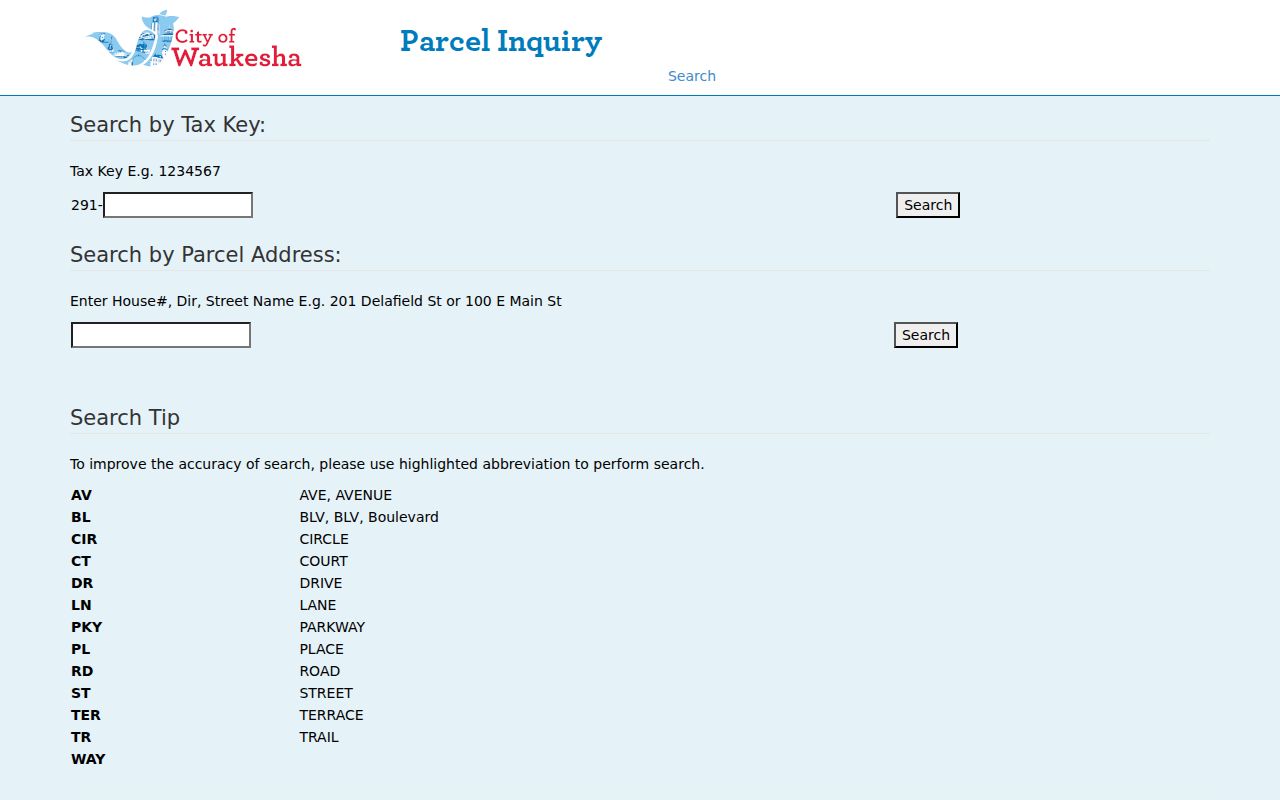
Treat the first card as a starting point only. Carry the displayed legal description into the land-record search to reach the full ownership picture.
- Search Parcel Inquiry by address or tax key and open the matching parcel.
- Copy the legal description and use it to choose a deed-index search mode.
- Review the latest recorded conveyance, then compare its parties and date with the tax-roll owner.
- Use GIS to inspect parcel context, then check the Treasurer bill if tax status matters.
- For older records, visit the Register of Deeds or use its tract and subdivision books.
The address-to-record method is covered in the Waukesha County property search steps.
Waukesha County Records Offices
Custody is split by record type. The Register of Deeds records the land instruments. Tax Listing coordinates parcel descriptions and county tax data, while each city, town, or village handles the detailed assessment work. The Treasurer keeps tax billing and collection history. The Circuit Court Clerk holds local case files, including foreclosure and probate matters.
Register of Deeds
515 W. Moreland Blvd., Room AC110
Waukesha, WI 53188
262-548-7583; Land Records 262-548-7589
Tax Listing
County parcel descriptions and tax data
Detailed assessment work is municipal
Free public parcel lookup
County Treasurer
515 W. Moreland Blvd., Room AC148
Waukesha, WI 53188
Monday-Friday, 8:00 a.m.-4:30 p.m.
Waukesha County Deed Search Depth
Depth depends on the era. The public Register of Deeds index generally reaches to 1994. The repository holds older material back to 1953. Some of it sits outside the same online search. Before 1994, tract, subdivision, and condominium books offer another route. Older book, page, reel, or image references may still need office research. That gap reflects remote indexing, not proof an older deed never existed.
Volume tells part of the story too. County budget material lists 65,277 recordings in 2017 and 67,407 in 2019. The count passed 100,000 in both 2020 and 2021. It fell to 48,102 in 2024. Swings like these explain why an online index matters. They also explain why older searches still lean on stable legal descriptions and staff-assisted tools.
Start with today's legal description. For an older chain, an old tax key can mislead. Keys change as parcels split, combine, or cross a municipal line.
Waukesha County Property Record Types
Each record set answers a different question. A deed names a transfer, while a mortgage records a loan interest. A tax bill shows charges and payment history. A GIS parcel places the land on a county map, though building permits and zoning actions stay with the municipality even when the parcel and deed remain county records.
| Record Type | What It Documents | Kept By | Access |
|---|---|---|---|
| Deeds, mortgages, liens | Recorded transfers and interests in land | Register of Deeds | Free index and view; copies cost extra |
| Parcel and tax listing | Tax key, owner field, address, legal description, assessment links | Tax Listing and municipal assessor | County portal plus local assessor |
| Tax bill and payment record | Charges, installments, and collection history | Treasurer | Online bill lookup; some online payments have a fee |
| GIS, plats, and CSMs | Parcel display, recorded lots, map, and district context | County GIS and Register of Deeds | Free viewer, data, and recorded-document search |
| Permits and zoning | Municipal work, land-use actions, and address files | City, town, or village | Local portal where available, otherwise request |
A conveyance and a tax bill answer different questions. For a deed chain, use the Waukesha County deed records route.
Waukesha County Address Changes at City Lines
Cities and towns assign their own building addresses. County systems hold the land records. A 2005 Mittelstadt annexation shows the pattern. An East Broadway address stood in the former Town of Waukesha. It became a numbered City of Waukesha address. Historic directories and old deeds may carry the earlier number. The current tax listing shows the newer one. Search both forms. Then use the legal description and annexation filing to confirm they describe the same land.
The county's REST parcel service describes municipal boundaries and annexations. The Wisconsin Municipal Data System stores filed municipal records. A postal city name alone cannot tell you which office handles permits or addressing. Check the parcel polygon and the boundary. Then ask the proper city, town, or village for its local files.
Waukesha County GIS and Parcel Limits
The Map Atlas lets you search by address or parcel number. You can toggle map layers and jump to Tax Listing or recorded land documents. Aerial imagery, school and county board districts, municipal boundaries, annexations, and a private onsite wastewater layer round out the context. The county GIS hub also links to downloadable public data and parcel services.
Parcel polygons serve tax and reference purposes only. The county cautions that GIS cannot replace an on-the-ground survey by a licensed professional. A line on a screen will not settle a boundary dispute. It will not tell a buyer where a fence belongs, either.
The county land information hub explains the map service. Read about its limits at Waukesha County GIS and Land Information Systems.
The Wisconsin Municipal Data System offers another view of the annexation filings. Those filings shape local boundary changes.
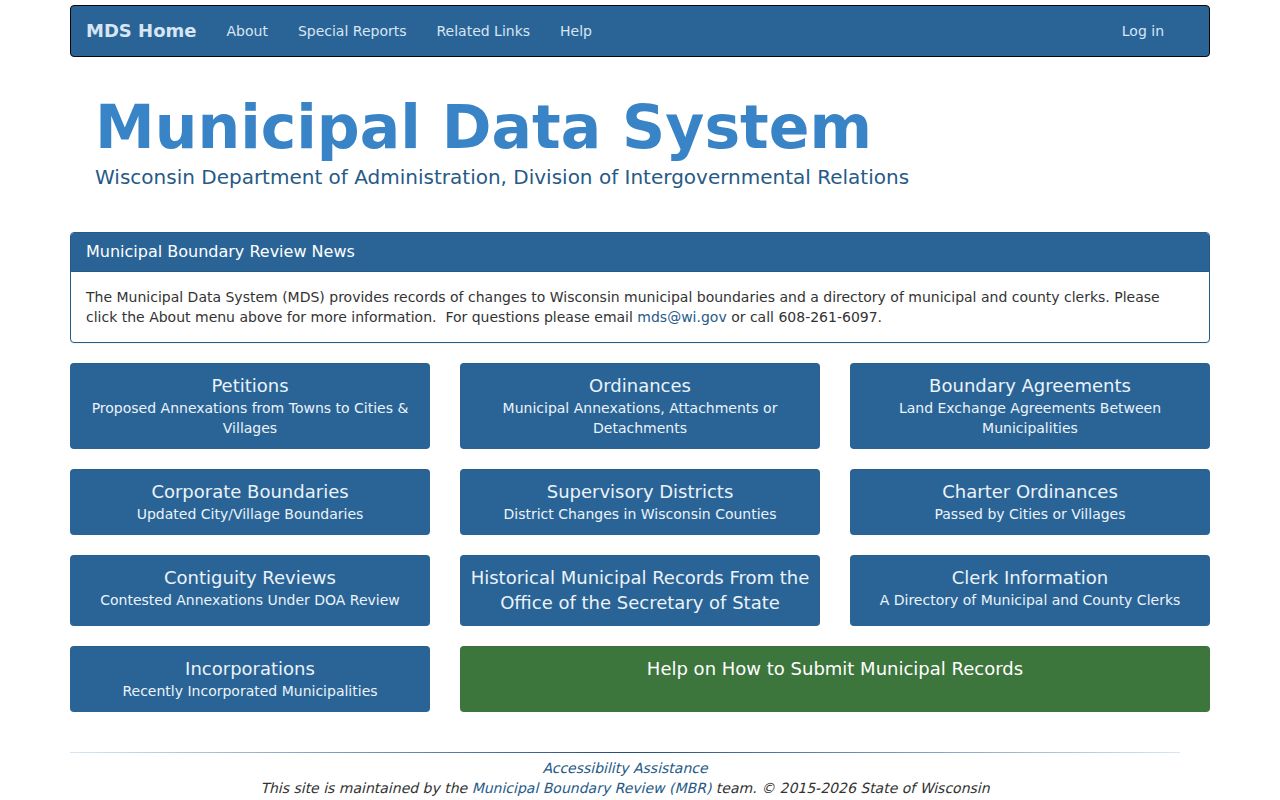
An old filing may describe land as part of a town. The current county map, though, shows that same land inside a city line today.
Waukesha County Tax Bills and Assessments
Tax Listing prepares bills for 34 municipalities. The detailed assessment work happens locally in each city, town, or village. The Treasurer keeps billing and collection history open to the public. Installments fall due January 31 and July 31. A tax bill proves what was charged and what was paid. It cannot establish title or predict a sale price.
Viewing a bill costs nothing. Online payments are another matter. The payment page lists a $1.50 checking fee, a $3.95 debit fee, and a 2.39 percent credit-card fee with a $1.50 minimum. Those charges attach to paying online, not to opening the public tax-bill record. Assessment questions belong with the local assessor. Start at the Waukesha County Tax Listing entry point. It ties parcel details to tax-bill information.
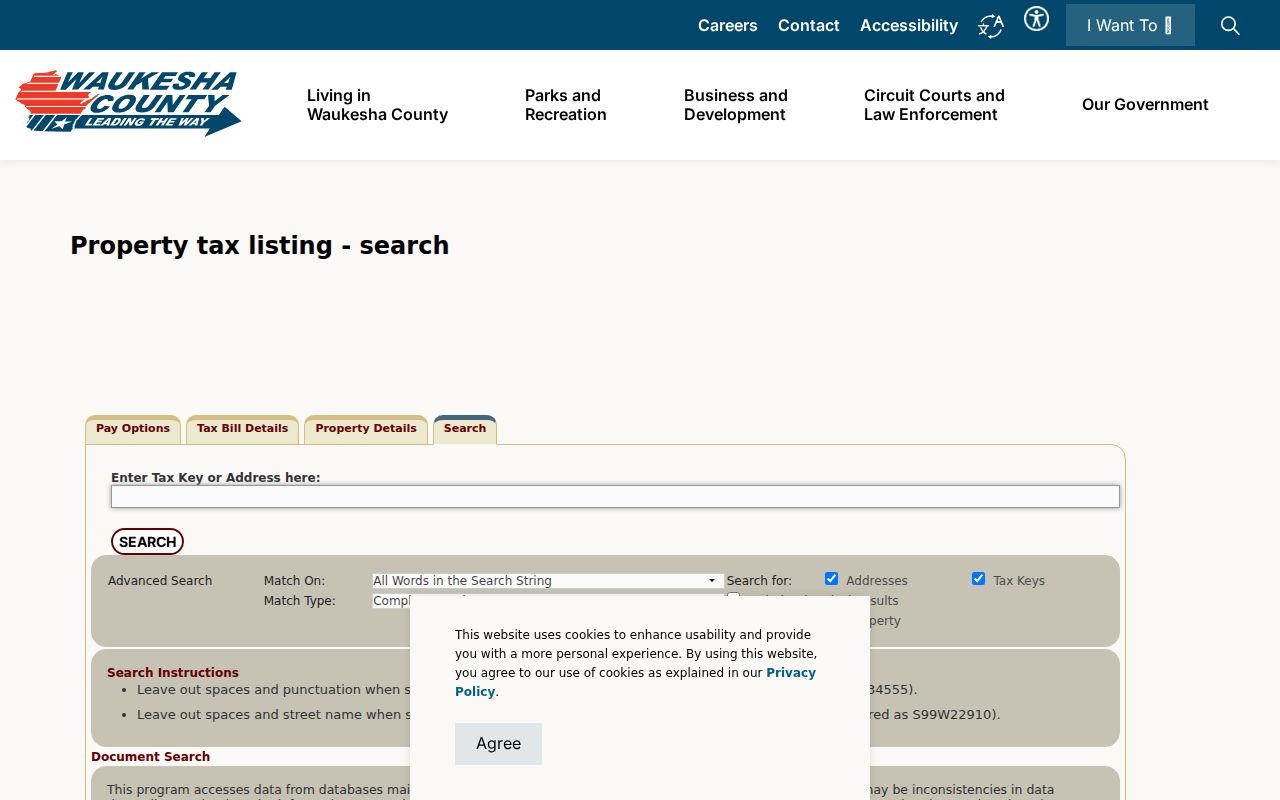
Let the parcel side supply the assessment and legal description. Then open the Treasurer bill when the question is a charge or a payment.
Waukesha County Property Fraud Alerts
Waukesha County's Recording Notification Service lets an owner subscribe with a parcel PIN or exact legal description. The owner also supplies an email address. When a matching document records, an alert follows. Coverage starts at sign-up, though. Nothing before that date triggers notice, and the service cannot stop a fraudulent filing. A document keyed differently may slip past without an alert at all.
The county's February 2025 notice spells out the Register of Deeds' position. Documents meeting statutory requirements must be recorded. A suspected fraudulent instrument cannot be pulled from the public database without a court order. Someone who spots a problem should keep the recording number and image. Then call law enforcement, and ask the Register of Deeds about the official record. An alert email is a prompt to verify. It is not proof of fraud.
Waukesha County Court and Estate Records
Court cases can change who owns land in Waukesha County. Foreclosures, probate, partitions, and quiet-title disputes all leave their mark on the record. A docket shows the parties and the filings. It does not replace the deed image or the full court record itself. Wisconsin Circuit Court Access offers a public route into case files, and Waukesha County supplements that with public-access computers at the courthouse plus help from the Clerk of Courts office.
The county's court record access instructions cover the public terminals, copy costs, and retrieval of older files. WCCA itself is available through Wisconsin Circuit Court Access. The same Waukesha County public-access page describes the terminals and copy procedures. Probate can reveal an estate transfer. Even so, the land description still has to match the parcel record.
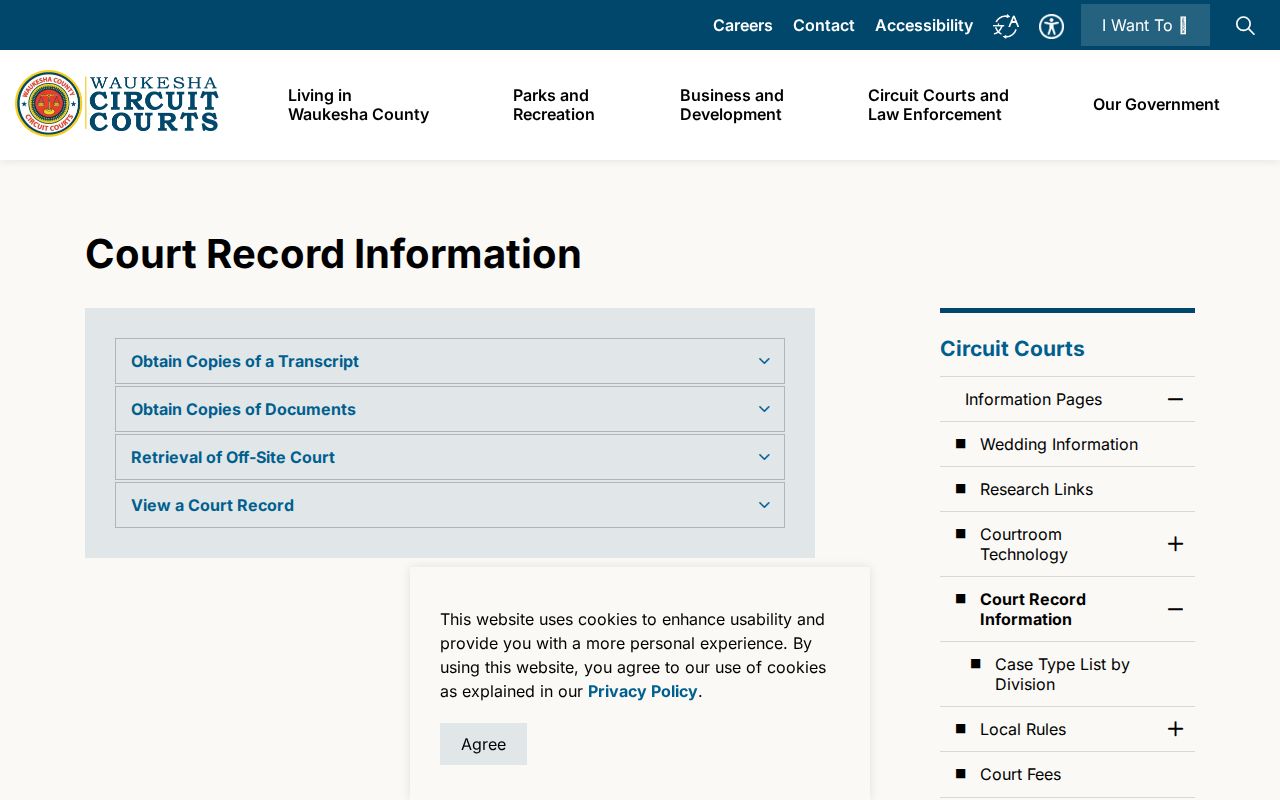
For an ownership question, one comparison settles it. Check the case event against the recorded deed before calling a court filing a transfer.
What Waukesha County Records Cannot Prove
Recorded instruments show what was filed, nothing more. The tax roll lists a parcel's owner. The Treasurer logs bills and payments. The GIS map draws a tax reference line. No single record guarantees clear title, fixes a boundary, or sets a price. A recorded mortgage may still need a later satisfaction. A lien dispute can spill into a court docket as well.
Lawful use. Use public records for property research, ownership verification, tax review, and civic purposes. A title company or attorney can address title questions, while a licensed surveyor can resolve a boundary. Do not use owner information to stalk, target, or harass anyone.
Waukesha County Property Searches Start With a Parcel
Start with the parcel, not the street number. A situs address works fine as an entry point into Waukesha County property records. But it only takes you so far. Parcel Inquiry or Tax Listing ties that address to a Tax Key and a legal description. Record all three. The situs marks the physical land. The Tax Key is the county's current parcel reference. The legal description defines the tract for recorded instruments. One caution applies to mail: a mailing address may point to an owner, trust, company, lender, or tax agent somewhere else entirely. Treat it as separate from the parcel address.
The legal description is your bridge into the Register of Deeds index. Subdivision parcels call for the recorded plat name and lot number. Condominium property needs the declaration name plus the unit. A Certified Survey Map parcel uses its map number and lot details. Unplatted land runs on quarter, section, township, and range. Opening the GIS Map Search from a county parcel is convenient. Yet it returns only documents indexed to that Tax Key. Treat it as one path into the deed records. It is not proof that every historical instrument appears in the result list.
Want to find a person across several parcels? Waukesha County provides no remote owner-name search across its GIS parcels. Party-name deed searches are unavailable remotely under the local ordinance. An individually identified parcel does display a tax-roll owner field. For name research, rely on the office's in-person service. Or pin down a likely parcel and verify the recorded deed.
Note: Keep the situs address, Tax Key, and legal description together for every Waukesha County property search.
Requesting Waukesha County Public Records
Some records simply are not online. When that happens, send your request to the office that keeps the record. Wisconsin Public Records Law, Wis. Stat. §§ 19.31-19.39, governs records held by public authorities. The Wisconsin Department of Justice describes a balancing test. It promises no universal seven-day or 30-day response. A custodian reviews each request and may charge permitted search, reproduction, or actual costs.
Put your request in writing and make it specific. Include the parcel address or legal description, the record type, a useful date range, and your preferred format. Ask for a deed or instrument by recording number whenever you know it. County staff will not run a title search. They will not chase down all liens without enough recording information. The Register of Deeds offers free public search and viewing, with separate charges for copies. Tax questions need one more distinction. A bill or payment record sits with the Treasurer, while assessment detail belongs to the municipality.
Note: Direct each Waukesha County public records request to the office that holds the record.
Waukesha County Recording Volume and Index Limits
Recording volume explains why index coverage matters. The county reported 65,277 recordings in 2017 and 67,407 in 2019. Totals rose above 100,000 in both 2020 and 2021, then landed at 48,102 in 2024. Those numbers cover documents processed, not property sales alone. The Register of Deeds also records mortgages, releases, plats, condominium declarations, CSMs, and liens. Other instruments appear there too.
A deed's recorded date and document type help you locate an event. A full chain-of-title review is a wider task. It may require mortgage releases, easements, probate filings, or a later corrective instrument. Viewing a document in the county index does not mean the county certifies clear title. Keep the instrument number and legal description handy. Consult a title professional whenever the legal status of an interest matters.
Note: High recording volume is the norm in Waukesha County deed records. One deed rarely tells the whole title story.