
Waukesha County Owner of Record Fields
Owner data lives on the parcel card, and the county Tax Listing and municipal assessment roll each attach an owner field to an individual parcel. Labels can vary. So open the card. One system shows details another omits. When the current owner matters, the legal description and latest deed reference give the best confirmation.
| Owner field | Tax-roll owner attached to the identified parcel; compare with a recorded deed. |
|---|---|
| Mailing address | Destination for tax notices, which may differ from the parcel's physical location. |
| Situs address | Municipality-assigned location used to find the parcel and related local files. |
| Tax Key | Current parcel identifier used by Tax Listing and GIS; may change. |
| Legal description | Land description that links the parcel to recorded conveyances. |
| Latest deed | Recorded document that confirms the most recent transfer event found. |
The owner of record is not always the occupant. Situs and mailing addresses do different jobs, and protected-address rules can limit what appears publicly.
Waukesha Tax Roll Versus Recorded Deed
The tax system lists an owner against a parcel for tax administration. The Register of Deeds is different. That office holds the recorded conveyance that actually transferred an interest. A new deed can outrun the tax card. The county publishes no exact countywide lag figure. So compare the recording date and legal description before deciding an owner record is wrong. The Waukesha County Tax Listing is the place to start.
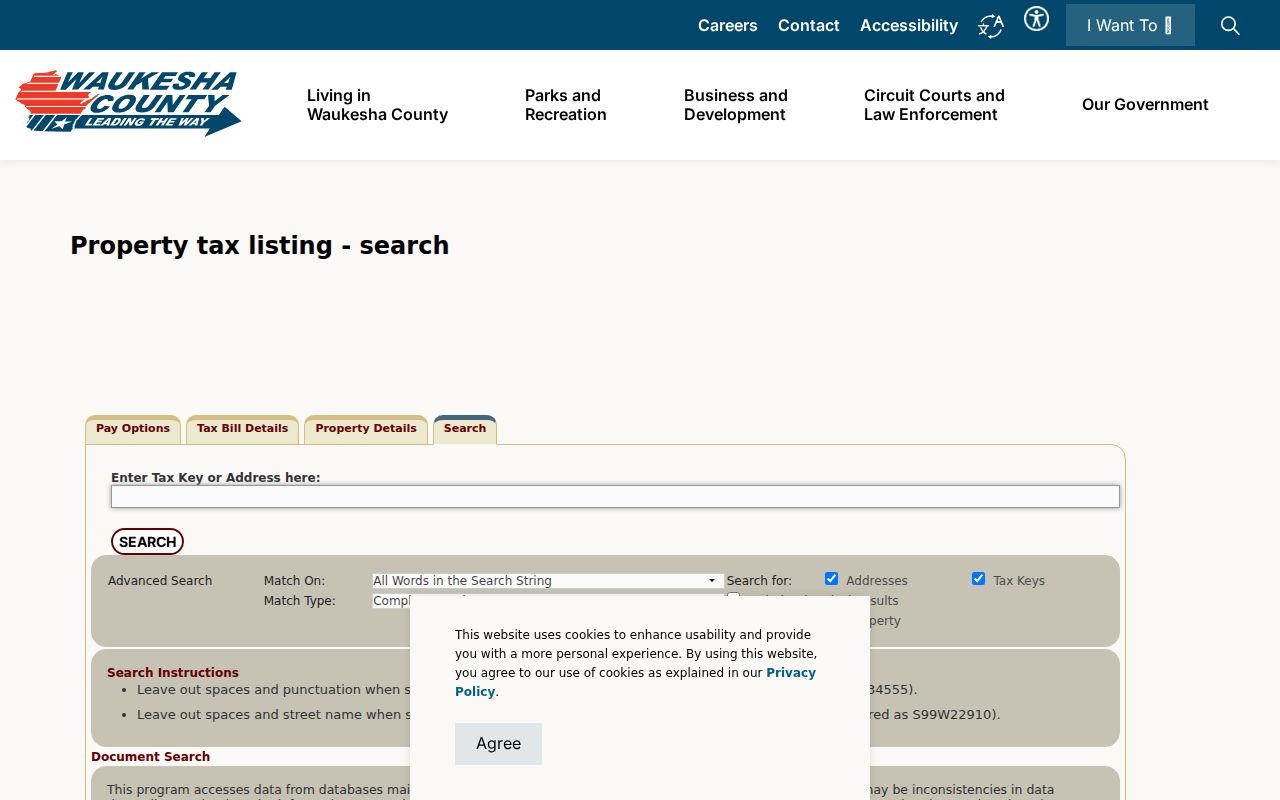
A tax card is a snapshot, not the transfer.
Confirming a Recent Waukesha County Sale
A recent closing needs a specific approach. Start with the legal description on the parcel card. Use it to search for the latest deed. The county portal handles searches by subdivision, condominium, metes-and-bounds, CSM, instrument number, and book or page. A GIS link may show only documents indexed to the tax key, so repeat the search with the full legal description if the deed is missing. Compare the deed parties, recorded date, and described land with the parcel. Old tax keys are not permanent title identifiers. The newest recorded conveyance is the better evidence of who received the property interest. A full title search may still require more documents.
Waukesha County Mailing and Situs Addresses
Situs is the physical parcel address. Mailing is where the owner receives tax notices. That destination can be a home, business, fiduciary, lender, or post-office box. An out-of-county mailing address moves nothing. Municipalities assign building addresses. So the Waukesha County tax card and the local permit file may carry different address histories after a boundary change. Use the situs to locate the map and permit jurisdiction. Treat the mailing address only as a tax-notice destination or contact clue. It is not proof of residence.
Checking the Current Waukesha Owner Record
A solid owner check moves from the roll to the recorded instrument. Identify the parcel first. Then match its legal description to the latest deed. If that document names an LLC, trustee, or personal representative, read the role shown in the deed instead of treating the name as an individual owner.
- Read the parcel owner field and keep the exact Tax Key and legal description.
- Search the Register of Deeds by the description or known instrument reference.
- Compare the grantee, recording date, and land described with the parcel.
- Check a public entity or probate filing if a company or estate is named.
- Owner of record
- The party named in a parcel tax field, subject to deed confirmation.
- Vesting
- The way a deed states an interest is held, such as joint or through an entity.
- Registered agent
- A public contact for a business filing, not necessarily the property's owner.
Waukesha County Trust and Estate Owners
A deed can vest property in joint owners, a trustee, or an estate representative. Context helps. Wisconsin DFI may confirm a company's public filing and registered agent. WCCA probate records may help after a death. Neither replaces the deed. The deed identifies both the land and the party. Waukesha's Register of Deeds describes an HT-110 or TOD-110 process for removing a decedent's name after a recorded transfer-on-death filing. The filer supplies the completed form, the document showing the decedent's interest, and other required return material, while the office itself does not decide whether the form is legally appropriate.
Waukesha County Recording Alert Limits
The free Recording Notification Service can report a later filing tied to a PIN or exact legal description. It starts only after subscription. It is not a full ownership monitor. A mismatch, or a document missing the expected parcel reference, can prevent a notice; the county also says the service does not prevent fraud and is not the official record. The official record sits elsewhere. The Recording Notification Service signup asks for the property PIN or legal description so alerts match the land.
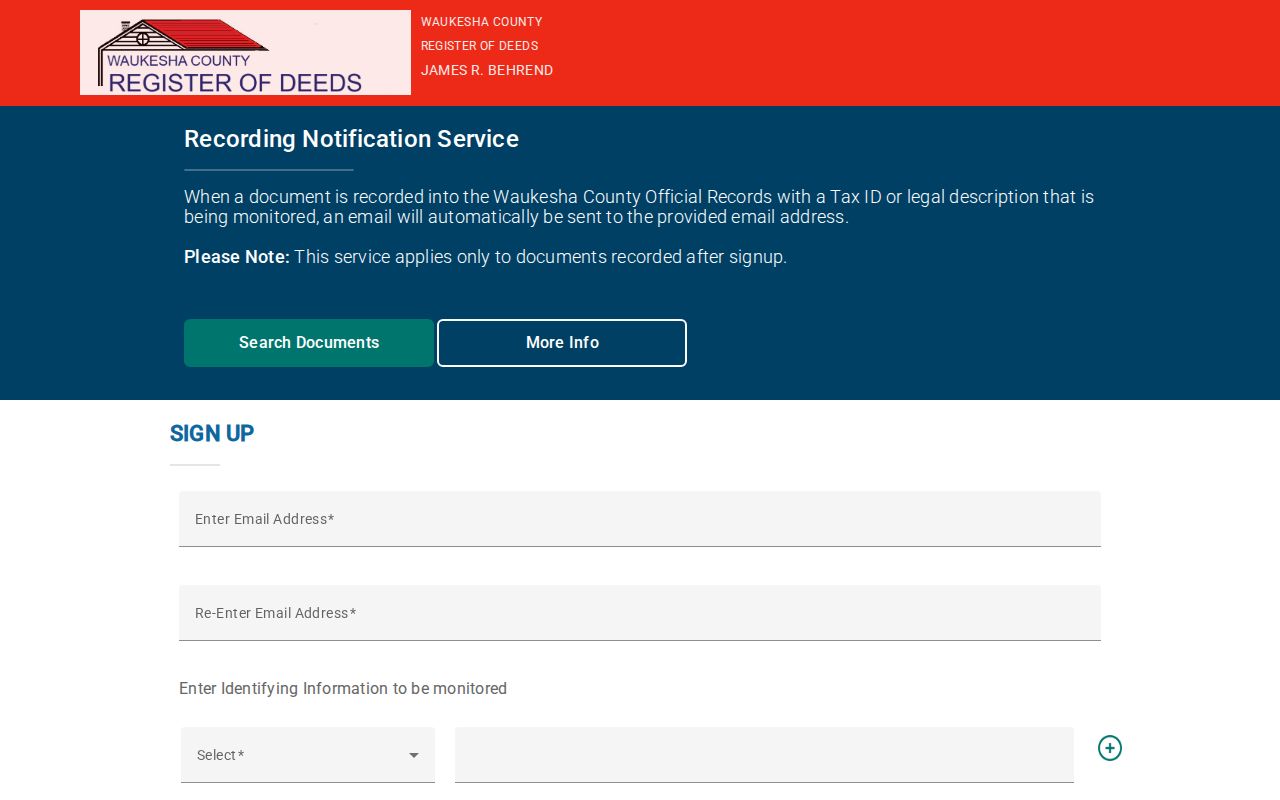
After an alert, confirm the actual document in the Register of Deeds search.
Using a Waukesha County Mailing Address
Tax notices go to the mailing address on the tax roll. It is not proof of residence. The address may reflect an LLC office, trustee, mortgage servicer, or forwarding address. Protected-address programs such as Wisconsin Safe at Home and DMV privacy rules can limit what residential details appear publicly.
Lawful use. Use owner and address fields only for a lawful property matter. Do not use an owner record to stalk, target, intimidate, or harass anyone.
When a Waukesha Tax Roll Owner Looks Outdated
No fixed timetable links a recorded deed to the owner field in Tax Listing. The gap can stretch for weeks. So a stale-looking owner is not proof of an error, and it does not mean a new deed has already worked its way through the tax system. Start with the parcel's legal description. Take it to the Register of Deeds index and pull the newest recorded conveyance by date and recording reference. Then compare names. Match the grantor and grantee on the deed against the tax-roll owner of record, and confirm the instrument describes the same land. Some deeds cover only part of a parcel. Others express a fiduciary role rather than personal ownership. When names differ, timing may explain it. An entity name, survivorship interest, estate transfer, or a later corrective instrument can also explain a mismatch. The Register of Deeds will confirm what its index shows, though the office gives no title opinion on who owns the property today.
Waukesha County Trust and Estate Ownership Events
A parcel can sit in a decedent's name long after the family opens probate or arranges a survivorship or transfer-on-death transfer. Waukesha County leaves two tracks to check. The probate docket may name an executor. A recorded deed or termination instrument documents the land event itself. Names can look odd here. A personal representative's deed, trust conveyance, or survivorship instrument may name a legal role, not a person acting for themselves.
For recorded transfers on death, the Register of Deeds follows an HT-110/TOD-110 process to remove the decedent's name. The filing needs the form. Add the applicable Real Estate Transfer Return and evidence of the decedent's interest. The recording fee is $30. No tax bill or death certificate is required. Whether the form fits a particular estate is not the county's call. Ask an attorney or title professional before treating the tax owner field as conclusive.
Waukesha Recording Notifications for a Current Parcel
Waukesha County's Recording Notification Service sends an alert when a document matching your parcel is recorded. Signing up takes the exact parcel PIN or legal description, plus an email address. The match runs on that identifier. A changed Tax Key or a mismatched legal description can quietly limit what an alert catches. So identify the parcel from the county record first. Then save the exact description you used at enrollment. Know what the service is not. An alert is a notification, not an ownership certificate, a fraud blocker, or a promise that every instrument will match. It only covers recordings after signup. Misaligned documents can slip past it. If a notice surprises you, preserve the recording data and compare it against the official deed index. The Register of Deeds is the source; direct legal or law-enforcement questions to the proper professional or public office.