
Waukesha County Property Tax Record Fields
Waukesha County's Tax Listing links parcels and bills. It does not handle every assessment task. The county prepares tax bills for its municipalities, while each local assessor handles the detailed valuation work. Keeping these field distinctions straight separates a tax amount from an assessed value and from a recorded sale.
| Field | What It Shows | Where |
|---|---|---|
| Assessment detail | Local assessed-value record and related parcel information; confirm exact fields with the municipality. | Municipal assessor; county Tax Listing links |
| Parcel and legal description | Tax Key, situs, and land description used to identify the parcel. | County Tax Listing |
| Tax bill | Charges billed for the parcel and municipality. | County Treasurer |
| Payment history | Collection status and payment information available from the bill system. | County Treasurer |
| Credit or exemption clue | A roll flag may indicate a tax claim, but it does not prove who occupies the property. | Parcel record; verify with the assessor |
An assessed value is a tax record. It is not the last sale price. Nor does it guarantee what the property would fetch on the market today. Confirm value labels and dates with the local assessor, since the county portal does not lay out a complete value history or the exact assessment level.
Where Waukesha County Assessment Work Happens
Tax Listing maintains parcel lists for the county. It tracks descriptions for taxable and exempt parcels and coordinates county tax data. Bill preparation for 34 municipalities happens here too. The municipality performs the actual assessment. A city parcel follows the city assessor. A town or village parcel follows that local office. The county portal is a handy first stop because it links the parcel, the bill, and the map.
If a value looks wrong, ask the local assessor which record date and property details support it. No single countywide revaluation cycle or appeal deadline applies, so get those dates and forms from the municipality rather than an assumed statewide schedule.
Waukesha County Tax Bill Entry Points
Two county entry points cover most tax bill questions. The Waukesha County Tax Listing portal helps you find the parcel by address or tax key. The Treasurer record answers what was billed. It also shows whether a payment was made. Viewing a public bill is free. Paying online, though, may add a processing fee.
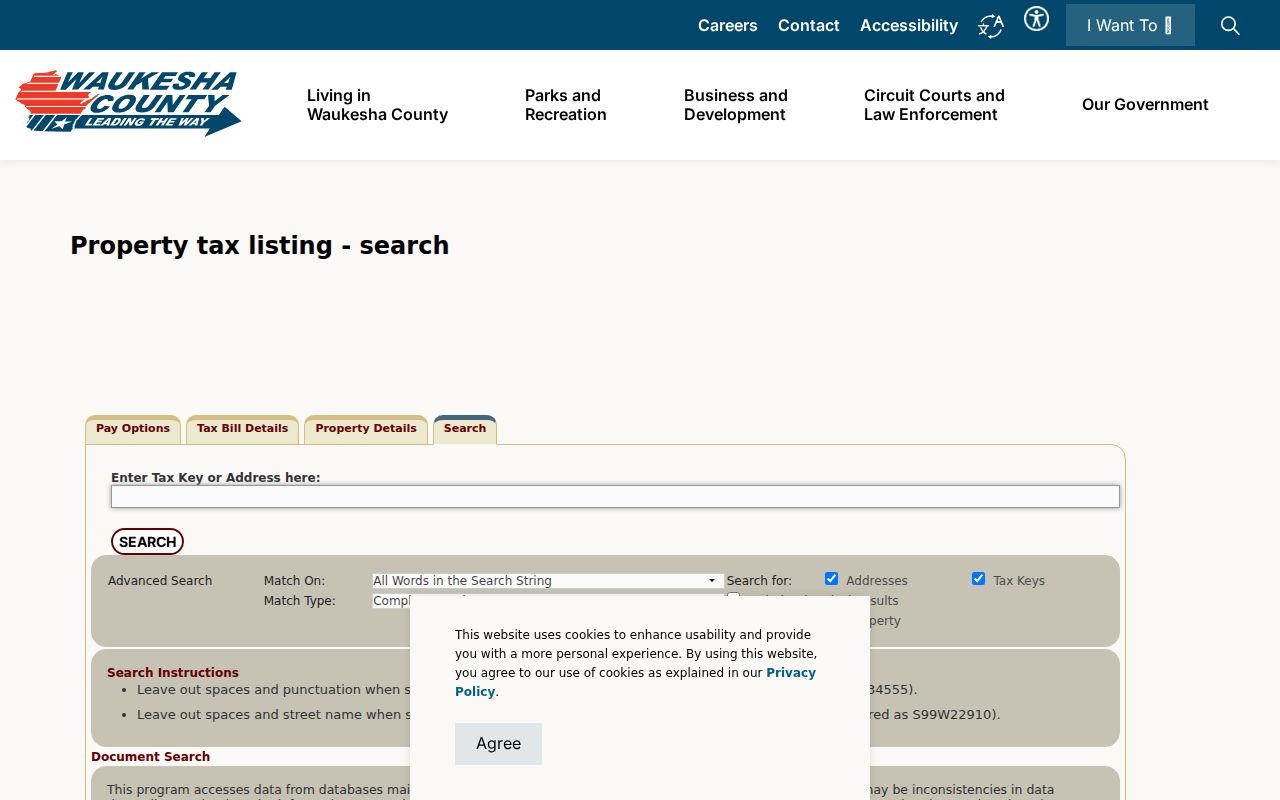
Keep the municipality and legal description from the search result on hand for any call to a local assessor or the Treasurer.
Municipal Value Detail in Waukesha County
The countywide bill can mislead. It makes it look like Waukesha County sets every local property value, when in fact Tax Listing only coordinates the parcel and billing system while cities, towns, and villages do the assessment work. A value dispute starts with the local assessor. That office maintains the parcel's assessment record.
The state public-records law can also surface a record that is not posted online. A request under Wis. Stat. §§ 19.31-19.39 should name the property, the assessment year sought, and the item requested. The Wisconsin DOJ guidance says custodians apply a public-interest balancing test. It also notes no fixed deadline for a response.
Waukesha County Installments and Payment Costs
January 31 and July 31 anchor the tax calendar. The Treasurer lists those as the general first and second installment due dates, though a particular bill can differ. Its own timing and payment status govern, so contact the Treasurer if a balance or receipt needs review. The county's fees apply only to online payment, never to viewing the tax record.
The official Waukesha County Treasurer page posts the charges. Checking costs $1.50. Payments above $10,000 pay $10 instead. Debit runs $3.95, and credit cards add a 2.39 percent charge with a $1.50 minimum. These service charges are not tax due.
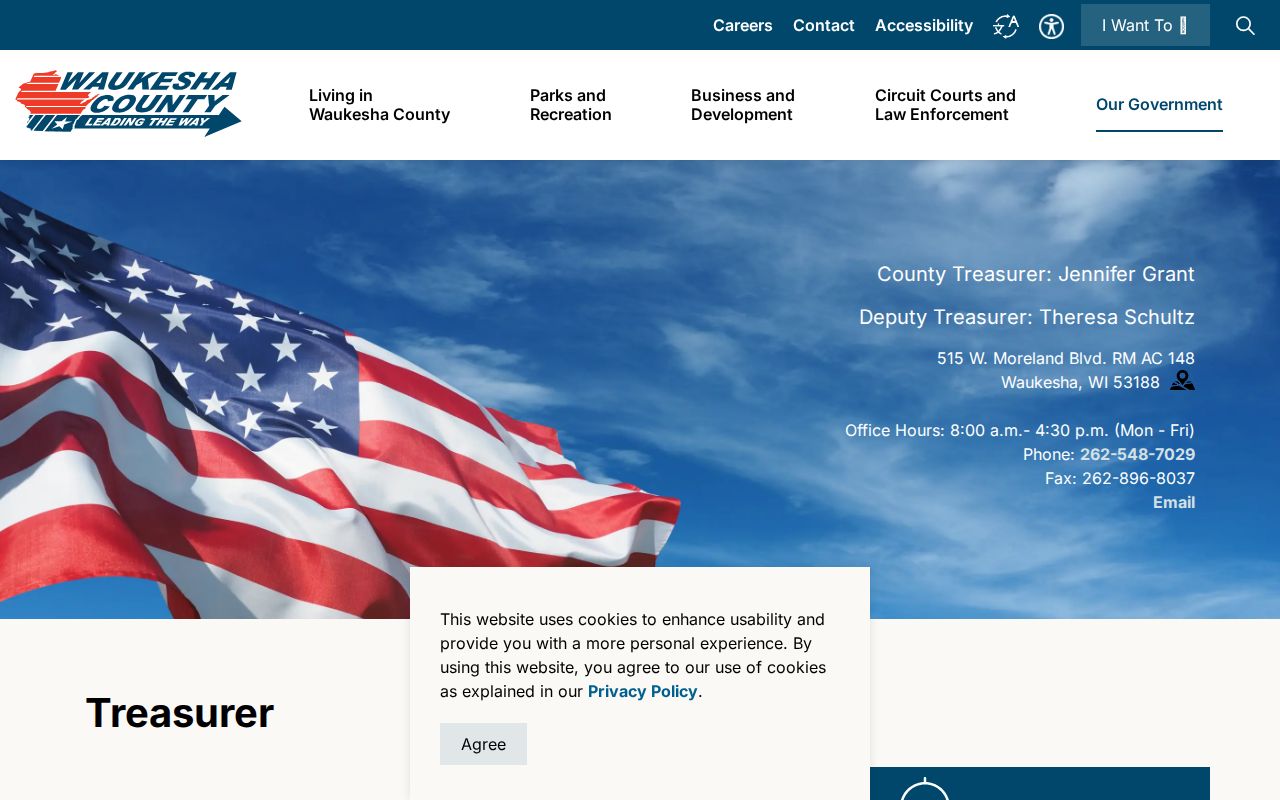
Use the county bill for the amount and payment route. The local assessor handles the valuation behind it.
Finding a Waukesha County Tax Bill
Use an address or Tax Key to find the parcel. Then open the bill link for the right year and municipality. The bill is a Treasurer record, not the deed. If the search lands on a nearby parcel or an outdated tax key, confirm the situs and legal description before relying on it.
- Find the parcel in Tax Listing with its current address or Tax Key.
- Open the Treasurer bill and check year, municipality, and payment status.
- Use the local assessor record for assessment details or a correction question.
- Ask the Treasurer about a balance, receipt, or collection record that is not clear online.
- Assessed value
- A value recorded for property-tax assessment by the local assessor.
- Tax levy
- The amount a taxing unit seeks to raise through property taxes.
- Tax credit
- A tax treatment shown on a bill or parcel record; verify the eligibility details with the custodian.
- Tax lien
- A recorded or legal claim tied to unpaid tax; check both Treasurer and land records.
Waukesha Tax Credits and Owner Fields
A homestead or lottery-credit flag sometimes appears in the parcel context during a Waukesha County property search. Labels vary by municipality. The flag is not proof of who lives there. Nor is it a guarantee of ownership. Ask the local assessor how the credit is recorded and what document supports a correction.
Tax treatment changes the bill, not the deed. Compare the bill to the parcel assessment, and let the local office explain the rule for a specific municipality or tax year. Do not infer an exemption from a neighboring parcel or an old bill.
Waukesha County Delinquency and Tax Sale Checks
A past-due line on a bill deserves a closer look. It does not prove a tax sale happened or that ownership changed. Start with the Treasurer, who holds the payment history for each parcel. A foreclosure or other tax-related case may also surface in Wisconsin Circuit Court Access. Any completed land transfer belongs in the Register of Deeds record. Confirm it there before drawing conclusions.
Waukesha County publishes no current delinquent-tax list and no tax-sale schedule. For a specific parcel, contact the Treasurer through the official county page. Then verify any resulting deed, lien release, or court case in the matching office. That cross-check keeps a bill status separate from the owner of record. That separation is exactly what a careful property search needs.
Reviewing a Waukesha County Assessment
Assessment appeals run through local boards. Waukesha County does not publish one countywide calendar. It publishes no single Board of Review date or appeal form covering every municipality. Each city, town, and village sets its own notice, deadline, and evidence rules. Ask the local assessor before filing anything. The county Tax Listing can help you identify the parcel. It cannot replace that local review process.
Check the local calendar. Do not rely on a general date. Contact the municipality that assessed the property and request its current appeal steps, filing deadline, and Board of Review schedule.
Waukesha County Tax Bill Lookup Versus Payment
Looking up a tax bill and paying it are two different acts. The public Tax Listing route locates the parcel and its bill information. The Treasurer keeps the billing and collection history. Viewing the bill costs nothing.
Online payment is where fees appear. Posted processing charges are $1.50 for checking. Checking payments over $10,000 carry a $10 charge. Debit costs $3.95. Credit costs 2.39 percent with a $1.50 minimum. Those charges cover payment processing, not access to the record. Fees and payment routes are also summarized on the Waukesha County Fees and Payments page.
Installments are generally due January 31 and July 31. Read the current bill for its own year, amount, instructions, and status. An older bill will not tell you what is due now. A receipt or payment history shows whether a charge was paid. It will not show whether a deed transferred title. It will not show whether an assessment is correct. Keep the tax year and Tax Key handy when comparing Waukesha County property records across years.
Where Waukesha County Assessment Questions Belong
The Waukesha County Tax Listing supports parcel lists and descriptions for taxable and exempt property. It also prepares tax bills for 34 municipalities. In addition, it coordinates county tax data. It is the central lookup route for a property search. Detailed assessment work still happens locally. The county is explicit that cities, towns, and villages handle it. A question about an assessment entry belongs with the local assessor. The same goes for property characteristics or a municipality's valuation process, not a countywide appeal.
No single assessment calendar, appeal deadline, or countywide revaluation schedule covers all 34 municipalities. Those details vary by community and by year. Use the tax portal to identify the local jurisdiction and tax year. Then confirm review procedures with that municipality. A tax bill carries levy and payment data. It is not an appraisal report. It does not promise a market sale at the assessed figure.
For older bills, assessment worksheets, or payment histories, the paper trail may not be online. An open-records request may be the route. Identify the office, the parcel, the tax year, and the exact record wanted. Wisconsin Public Records Law applies a custodian review and balancing test. It sets no single fixed response deadline for every request.